
Street-Legal Dual-Sport vs Dirt Bike: What Actually Differs
A clear category explainer: plated dual-sports vs off-road-only dirt bikes - lighting, mirrors, emissions, weight, tires, and where each tool wins. Public category facts only; not a ridden shootout.
 Trail Roamer Editorial TeamSep 4, 2026 · 1 min read
MethodologyCategory explainer built from publicly known dual-sport vs off-road-only differences, without bike-specific curb weights or dyno figures. Legal notes are general - verify state DMV and land-manager rules.
A dirt bike is optimized for closed-course or designated off-highway use: light chassis, aggressive gearing, minimal lighting. A street-legal dual-sport adds the equipment and certification path to ride public roads between trails - usually at the cost of weight and complexity.
Category differences riders actually feel: lights/mirrors/horn/turn signals, often a heavier flywheel or different gearing for connectors, DOT-oriented tires from the factory on many dual-sports, and emissions/noise equipment that off-road-only bikes may omit.
Legality is local. Street-legal means the OEM (or a legal conversion) meets your state's titling, insurance, and inspection rules. An off-road-only bike with a headlight bolted on is not automatically street-legal - check DMV and forest/OHV rules before you assume connectors are allowed.
Trail manners: pure dirt bikes usually tip over easier to pick up and climb technical sections with less effort. Dual-sports usually win the ride-to-the-trailhead convenience and mixed-surface weekend loop.
Decision shortcut: mostly trucked to OHV areas and racing → dirt bike class. Ride from home on pavement to dirt and back → dual-sport class. Sit on both; weigh your actual roads and trails, not forum extremes.
Sources
- Kawasaki Dual-Purpose Category (OEM framing) - Kawasaki · accessed Sep 4, 2026
- Suzuki DualSport Category (OEM framing) - Suzuki Cycles · accessed Sep 4, 2026
Street-legal dual-sport
Ride-to-trail loops on public roads · Score Category
Pros
- Legal pavement connectors (when titled/insured)
- Factory lighting for dusk exits
- Often friendlier stock gearing for mixed surfaces
Cons
- Typically heavier than comparable dirt-only bikes
- More emissions/noise equipment to maintain
Who should skip: Riders who only trailer to tracks and want the lightest tip-over recovery.
Off-road-only dirt bike
OHV areas, tracks, and trucked trail days · Score Category
Pros
- Usually lighter and simpler for technical trail
- Race/OHV focused setups
- Fewer street components to break
Cons
- Not automatically legal on public roads
- Needs transport to riding areas
Who should skip: Riders without a truck/van who need to ride pavement to the trailhead.
FAQ
- Can I plate a dirt bike?
- Some states allow conversions with inspections and equipment lists; many do not make it easy. Start with your DMV and a dealer familiar with dual-sport titling - do not assume a headlight kit is enough.
- Did you test bikes for this explainer?
- No. It's a category explainer built from publicly known dual-sport vs off-road differences.
Related
BikesComparison
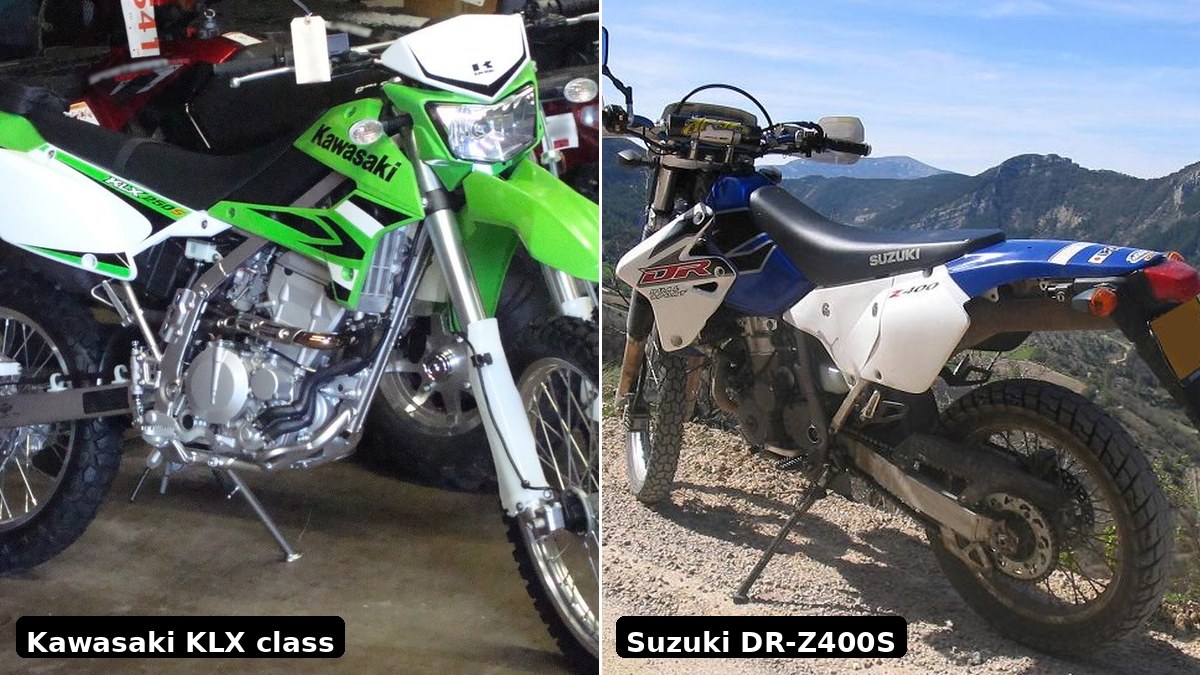
KLX300 vs DR-Z400S for Dual-Sport Beginners (Category Comparison)
A street-legal dual-sport shortlist comparison built from publicly known category facts - displacement class, typical use cases, and ownership tradeoffs. We haven't ridden these two back to back for this comparison, and prices change, so check with your dealer before you budget.
BikesHow-To
Used Dual-Sport Buying Checklist (Inspect Before You Wire)
A practical pre-purchase checklist for used dual-sports: title/VIN, hours vs miles, oil leaks, wheel bearings, valve service history, crash damage, and a sane test ride. It's an inspection guide, not a price guide.
GearRoundup
Dual-Sport 50/50 Tire Guide (Dirt vs Street Bias)
How to pick 50/50 and near-50/50 dual-sport tires: tread bias, DOT markings, load/speed ratings, and commonly shopped Trailmax, Anakee Wild, Scorpion Rally, and Shinko options. It's a shopping guide, not a wear test.
NewsRecall
Stop Riding: Husqvarna & GASGAS Braktec Rear Caliper Recall (CPSC + NHTSA)
CPSC recall 26-710 covers ~21,040 U.S. 2021-2024 GASGAS and 2022-2024 Husqvarna off-road bikes whose Braktec rear caliper can crack or break, and CPSC says stop riding them. Related NHTSA 26V443 covers ~6,257 plated FE S / ES dual-sports: check your VIN and book the free dealer repair.
NewsRecall
Dual-Sport Owners: NHTSA 26V443 Owner Letters Begin for FE/ES Rear Caliper Recall
NHTSA campaign 26V443 covers certain 2022-2024 Husqvarna FE 350S/501S and 2024 GasGas ES 350/ES 500 dual-sports. Owner notification letters were mailed August 31, 2026, per NHTSA; free caliper replacement is the remedy.
NewsRecall
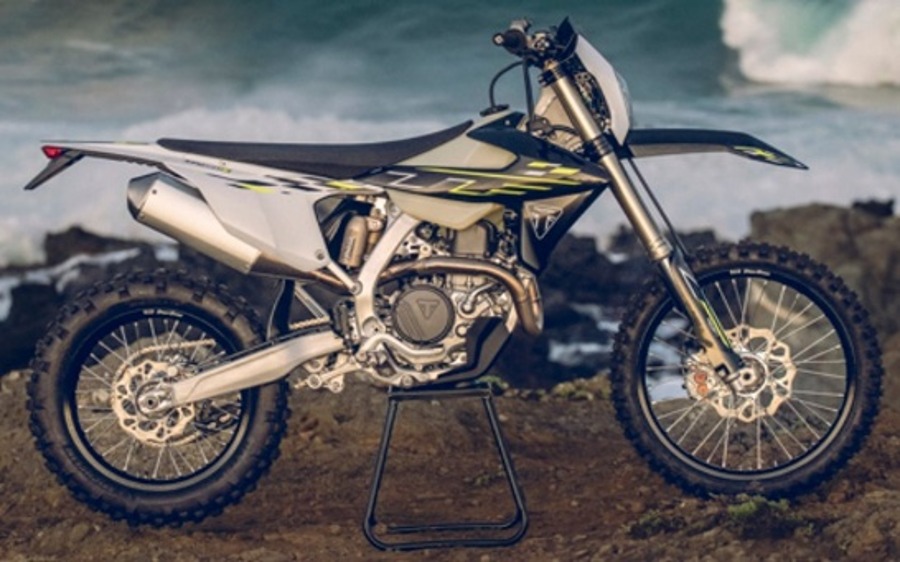
Stop Riding: CPSC Recalls ~1,560 Triumph TF450 Dirt Bikes for Cylinder-Head Swap
CPSC recall 26-763 (Sep 10, 2026) covers about 1,560 U.S. 2025-2026 Triumph TF450-C/E/X and TF450RC Edition closed-course bikes whose exhaust rocker arm can seize - stop riding if affected; free dealer cylinder-head replacement. Check VIN on Triumph’s owner recalls page.
Newsletter
Trail Roamer daily brief
One email with the trail news, race results, recalls and gear stories worth your time.