
Tire Pressure for 50/50 Dual-Sport Days
Fifty-fifty dual-sport days live between road and dirt pressure. Start from cold OEM road and off-road numbers, then bias inside that window for pavement, loose soil, and load — without treating the tire sidewall maximum as a target.
 Maya TorresSep 25, 2026 · 5 min read
Fifty-fifty dual-sport riding is the awkward middle kid of tire pressure: too high and the front skates on loose gravel; too low and the carcass rolls on a paved connector. The number molded into the sidewall is a *maximum*, not a ride setting. Start from the cold pressures in your owner's manual, then trim for the day you are actually riding.
Start cold, start with the book
Check pressures before the tires warm up. OEM manuals for street-legal dual-sports often publish solo road targets in the low-20s psi range; many off-road / EXC-style manuals also list separate road vs off-road columns, with off-road numbers commonly around the mid-teens. Treat those columns as bookends for a mixed day — not an invitation to invent a third number from a forum screenshot.
Write the cold baseline on tape on the fork tube so you are not guessing at a gas station with a tired stick gauge.
Bias for the surface, not the ego
More pavement or loaded luggage: bias toward the higher (road) end of your OEM window for stability and heat management. More dirt, sand, or sharp rocks at moderate speed: bias toward the lower (off-road) end so the tire can make a longer contact patch — still inside the range the manufacturer endorses. Big altitude and temperature swings move the needle; recheck after a long climb or a desert afternoon.
Tubes, mousse, and tubeless change the risk math
Tube-type wheels puncture differently than tubeless setups. Running aggressively low on a tube invites pinch flats when you slap a square edge. Tubeless and beadlock / security-bolt setups change how far you can responsibly go, but they do not repeal physics. If you experiment below the OEM off-road number, do it on a familiar loop with a plug kit, pump, and the humility to air back up for the highway home.
Load and passenger reality
Two-up or soft bags stuffed for an overnight? Bump toward the loaded / road guidance in the manual. Under-inflated rears with luggage cook the carcass and feel vague in sweepers. Over-inflated fronts with a light rider skate on washboard.
Rider takeaway
Cold OEM baseline first, then small bias for pavement vs dirt within that window. Recheck when temperature, load, or elevation changes — and never treat the sidewall max as a target. This is pressure method, not a tire model buyer guide.
Sources
- Example KTM owner's manual — road vs off-road tire pressure split — KTM owner's manual (example) · accessed 2026-09-25T13:40:00-04:00
- Suzuki DR-Z400S owner guidance — example solo tire pressures — Suzuki / ManualsNet summary · accessed 2026-09-25T13:40:00-04:00
FAQ
- Is the number on the tire sidewall my dual-sport setting?
- No. That is typically a maximum cold inflation limit for the tire construction. Use the motorcycle manufacturer's recommended pressures for your model and load.
- Should front and rear always match?
- Only if the OEM chart says so. Many dual-sports list different front and rear targets, plus road vs off-road columns.
Related

GearRoundup
Dual-Sport 50/50 Tire Guide (Dirt vs Street Bias)
How to pick 50/50 and near-50/50 dual-sport tires: tread bias, DOT markings, load/speed ratings, and commonly shopped Trailmax, Anakee Wild, Scorpion Rally, and Shinko options. Category guidance — not a fake wear test.
How-To & TechHow-To
Beadlock vs Tube: Choosing a Dual-Sport / Enduro Wheel Setup
Dual-sport and enduro wheel setups trade weight, cost, and trailside repair skill. Tubes remain common; tubeless with security bolts or true beadlocks change how you run pressure and fix flats. Choose the stack you can service away from the truck.

NewsRecall
Stop Riding: Husqvarna & GASGAS Braktec Rear Caliper Recall (CPSC + NHTSA)
CPSC recall 26-710 covers ~21,040 U.S. 2021–2024 GASGAS and 2022–2024 Husqvarna off-road bikes whose Braktec rear caliper can crack or break. Related NHTSA 26V443 covers ~6,257 plated FE S / ES dual-sports. Stop riding if affected; free authorized-dealer caliper (+ bracket) repair — verify VIN on official checkers.
NewsRecall
Dual-Sport Owners: NHTSA 26V443 Owner Letters Begin for FE/ES Rear Caliper Recall
NHTSA campaign 26V443 covers certain 2022–2024 Husqvarna FE 350S/501S and 2024 GasGas ES 350/ES 500 dual-sports. Owner notification letters were expected to mail beginning September 2, 2026; free caliper replacement is the remedy.
NewsRecall
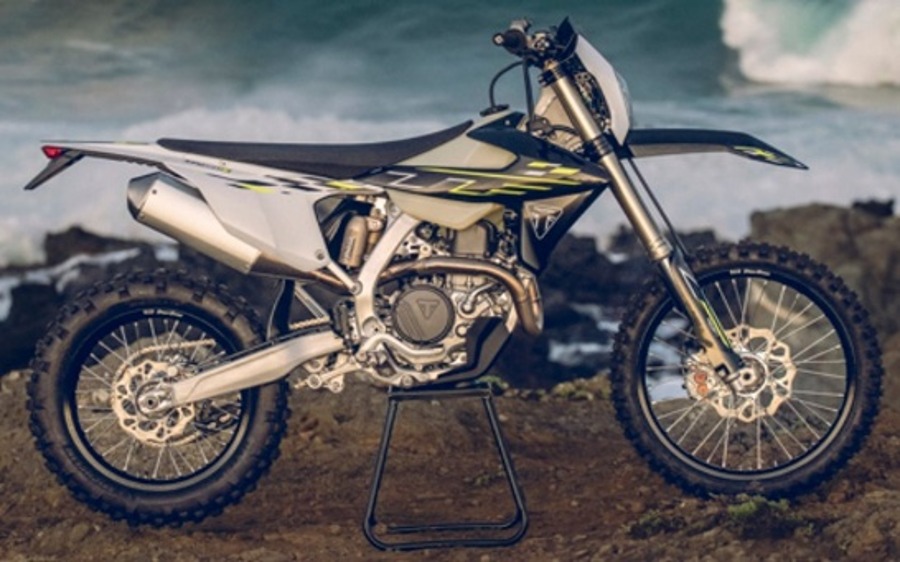
Stop Riding: CPSC Recalls ~1,560 Triumph TF450 Dirt Bikes for Cylinder-Head Swap
CPSC recall 26-763 (Sep 10, 2026) covers about 1,560 U.S. 2025–2026 Triumph TF450-C/E/X and TF450RC Edition closed-course bikes whose exhaust rocker arm can seize — stop riding if affected; free dealer cylinder-head replacement. Check VIN on Triumph’s owner recalls page.

Trail AccessPolicy
Forest Service Opens Comment on Travel Management Rewrite Favoring More Motorized Access
Federal Register NOI (Aug 24, 2026; 91 FR 54686) starts EIS/rulemaking to revise 36 CFR part 212 toward an open-unless-closed access presumption and annual closure review. Comments due Sept 23, 2026 on Docket FS-2026-0100. Existing MVUMs stay until locally revised — not legal advice.
Newsletter
Trail Roamer daily brief
One list, one brief: trail news, race results, recalls, and gear that earned it — not separate race vs weekend lists.